Picture this: You’re in a bustling Belgrade kafana, the air thick with the scent of grilled meat and fresh-baked bread. A waiter slides a sizzling plate your way, and suddenly, you’re hooked. That’s how Serbian food grabbed me on my first trip there back in 2018. I’d wandered into a tiny spot off Skadarlija, expecting something basic. What I got was a feast that felt like a warm hug from a long-lost relative—rich, unpretentious, and utterly addictive.
Serbian cuisine isn’t flashy like French or intricate like Japanese. It’s hearty Balkan soul food, shaped by centuries of Ottoman, Austro-Hungarian, and Slavic influences. Think smoky grills, tangy ferments, and creamy dairy that makes everything better. It’s food for sharing, for family tables groaning under platters, and for those cold winter nights when you need something to stick to your ribs.
If you’re a beginner, this guide is your roadmap. We’ll cover 11 essential dishes and staples that define Serbian eating. From street-side snacks to home-cooked treasures, these are the ones locals swear by. I’ve eaten my way through Belgrade, Niš, and the Vojvodina plains, and trust me—these will change how you see Eastern European food. Let’s dive in.
Why Serbian Food Deserves Your Attention
Serbian meals aren’t rushed affairs. They’re events. Breakfast might stretch into lunch, and dinner often means endless small plates passed around with rakija toasts. The portions are generous—Serbs believe in abundance as a sign of hospitality. And while meat dominates, vegetarians aren’t left out, thanks to clever veggie sides and pies.
What sets it apart? The balance. Smoky, spicy, creamy, and tangy all in one bite. It’s influenced by neighbors but stamped with Serbian pride. During summer festivals like Roštiljijada in Leskovac, the whole city smells like paradise. Winter brings slow-cooked stews that warm the soul. If you’re planning a trip or just cooking at home, these 11 picks will get you started right.
Grilled Meat Mastery: Ćevapi and Pljeskavica
Serbs take their barbecue seriously—it’s practically a religion. These two are the kings of the grill, perfect for beginners because they’re simple yet explosive in flavor.
Ćevapi: The Ultimate Street Snack
Ćevapi are those little grilled sausages made from minced beef and pork, sometimes lamb. Hand-rolled into finger-sized bites, they’re charred on the outside, juicy inside. I still remember my first one at a hole-in-the-wall in Novi Sad—five of them tucked into warm lepinja flatbread, topped with raw onions and a dollop of kajmak. Heaven.
What makes them special? The seasoning is subtle: salt, pepper, maybe a hint of garlic. No fancy marinades. Just quality meat grilled over open flames. Serve them with ajvar for that sweet-peppery kick.
Pros: Portable, crowd-pleasing, gluten-free option with bread swap.
Cons: Can be greasy if not grilled right—stick to reputable spots.
Pljeskavica: Serbia’s Juicy Burger
Think of pljeskavica as the big brother to ćevapi—a massive, spiced meat patty grilled to perfection. Pork, beef, and lamb mix, often stuffed with cheese or kajmak for extra indulgence. It’s served in a lepinja pocket, piled high with onions, tomatoes, and urnebes for heat.
Locals in Leskovac claim the best ones, where the festival turns the town into a meat-lover’s dream. I tried a “leskovačka” version there—spicy, smoky, and bigger than my hand. Pair it with a cold Jelen beer, and you’re living the Serbian dream.
How to order like a local: Ask for “pljeskavica u lepinji” for the full sandwich experience.
Comfort Food Classics: Sarma and Prebranac
These are the dishes that scream “home cooking.” Slow-simmered, soul-soothing, and perfect for chilly evenings.
Sarma: Cabbage Rolls That Warm the Heart
Sarma are pickled cabbage leaves wrapped around a filling of minced pork, rice, and spices, then braised in a tangy tomato sauce with smoked meats. It’s a winter staple, often made in huge batches for holidays like Christmas or Slava (family saint’s day).
My Serbian friend in Belgrade invited me over for her grandma’s version—layers of flavor from the sour cabbage cutting through the richness. Vegetarian twists use mushrooms or lentils. It’s labor-intensive, which is why it’s so revered.
Pro tip: Save room for seconds; it tastes even better the next day.
Prebranac: The Humble Baked Bean Hero
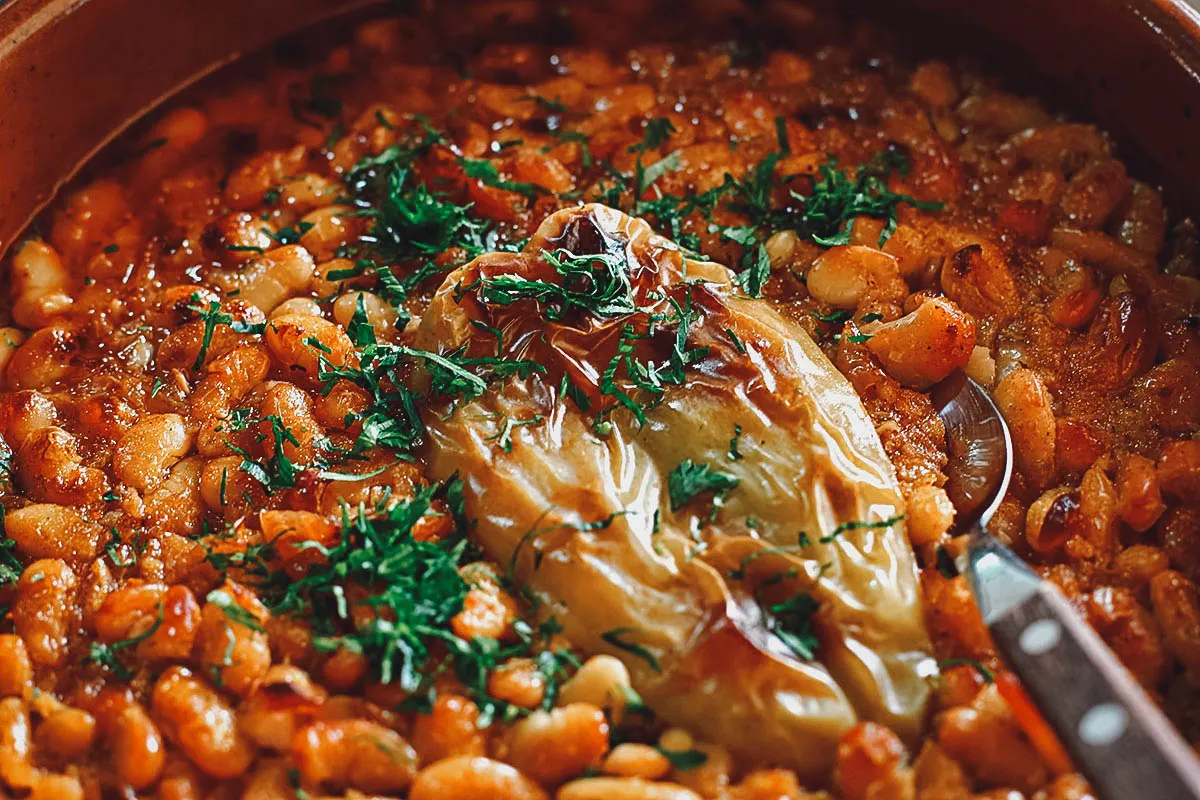
Prebranac is white beans baked with onions, paprika, and sometimes bacon until caramelized and creamy. It’s a Friday fasting dish in Orthodox tradition—vegan by default, hearty enough for meat-eaters.
I discovered it at a monastery guesthouse near Fruška Gora. Simple ingredients, but the slow oven magic turns it into something profound. Serve with crusty bread to mop up the sauce.
Comparison to other bean dishes: Unlike American baked beans (sweet), this is savory and smoky—more like a cassoulet lite.
Savory Pies and Pastries: Gibanica, Burek, and Proja
Serbian pies are flaky, filling, and everywhere—from bakeries to family tables.
Gibanica: The Cheese Pie That Steals the Show
Gibanica layers thin filo dough with a mix of cottage cheese, eggs, and kajmak, baked until golden and bubbly. It’s a breakfast or snack staple, sometimes sweet with nuts.
At a pekara in Niš, I grabbed a warm slice with yogurt—crispy edges, gooey center. It’s versatile: plain, with spinach (zeljanica), or meat (burek-style).
Why it’s a must: Affordable, satisfying, and travels well for picnics.
Burek: Breakfast on the Go
Burek is filo pastry stuffed with cheese, meat, spinach, or potatoes, baked or fried into spirals. Grab one fresh from a bakery at 7 a.m., wash it down with yogurt, and you’re set for the day.
I lived on burek during a rainy week in Belgrade. The meat version is like a portable pot pie—savory, flaky perfection.
Pro: Quick and cheap. Con: Addictive—hard to stop at one.
Proja: Cornbread’s Rustic Cousin
Proja is a cornbread-like bake made with cornmeal, eggs, and cheese. Dense, crumbly, and ideal with soups or as a side.
In the countryside near Zlatibor, I had it hot from the oven—earthy and comforting. Great for gluten-sensitive folks too.
Creamy and Condiment Staples: Kajmak, Ajvar, and Urnebes
These aren’t mains, but they elevate everything.
Kajmak: The Creamy Spread That Changes Meals
Kajmak is clotted cream from unpasteurized milk—salty, tangy, like a cross between butter and cheese. Slather it on bread, mix into pies, or top grilled meats.
Fresh from a farm near Čačak, it was life-changing. Locals say the best comes from mountain cows.
Table: Kajmak vs. Similar Dairy
| Item | Texture | Flavor Profile | Best With |
|---|---|---|---|
| Kajmak | Creamy, spreadable | Tangy, salty | Grilled meats |
| Sour Cream | Loose, pourable | Mild, acidic | Soups |
| Feta | Crumbly | Briny | Salads |
Ajvar: The Red Pepper Relish Everyone Craves
Ajvar is roasted red peppers blended with eggplant, garlic, and oil into a smoky spread. It’s Serbia’s answer to hummus—vegan, addictive, and jarred for souvenirs.
I bought a jar in Leskovac and ate it on everything. Sweet or spicy versions abound.
How to make at home: Roast peppers, peel, mash—simple but rewarding.
Urnebes: The Fiery Cheese Mess
Urnebes means “chaos”—a whipped mix of salty cheese, chili, garlic, and sour cream. It’s the spicy sidekick to grills.
In Niš, it’s milder; elsewhere, it packs heat. Dip your ćevapi in it for a thrill.
Sweets and Sips: Rakija, Slatko, and Uštipci
No meal ends without something sweet or strong.
Rakija: The National Spirit
Rakija is fruit brandy—plum (šljivovica) is king, but apricot and quince shine too. 40% ABV, sipped in shots.
My first rakija toast in a Belgrade bar felt like fire and fruit. It’s medicinal, social, and everywhere.
Tip: Start with honey versions for smoothness.
Slatko: Sweet Preserves for Welcoming Guests
Slatko is fruit preserved in sugar syrup—served with a spoon as a welcome ritual. Raspberries are huge here; Serbia grows 8% of the world’s supply.
Try plum-cocoa for a twist.
Uštipci: Fried Dough Bliss
Uštipci are fluffy fried dough balls, dusted with sugar or jam. Like Balkan beignets.
In Vojvodina, they’re a festival treat—light, crispy, gone in seconds.
Where to Find These in Serbia (and Beyond)
Hunting authentic bites? Belgrade’s Skadarlija district is a goldmine—try “?” tavern for sarma. Niš for the best roštilj. For expats, Chicago’s Serbian spots nail it.
Comparison: Belgrade vs. Rural Eats
- Belgrade: Trendy twists on classics, like kajmak-stuffed pljeskavica at fancy spots.
- Countryside: Pure, farm-fresh—think homemade burek from village pekaras.
People Also Ask: Quick Answers to Serbian Food Questions
What is the national dish of Serbia?
It’s a tie between ćevapi and sarma—both embody the hearty, communal spirit.
Is Serbian food spicy?
Mildly, thanks to ajvar and urnebes. Not like Thai heat, but flavorful fire.
What do Serbians eat for breakfast?
Burek with yogurt, or gibanica. Simple, satisfying starts.
Where can I find Serbian food outside Serbia?
Look for Balkan restaurants in diaspora hubs like Toronto, Sydney, or New York.
How healthy is Serbian cuisine?
Portion control is key—lots of veggies and ferments balance the meats.
FAQ: Your Serbian Food Questions Answered
Q: Can I make these dishes at home?
Absolutely. Start with ajvar—it’s forgiving. For ćevapi, grind your own meat for authenticity.
Q: Are there vegetarian options?
Yes! Prebranac, gibanica, and ajvar-loaded plates. Serbs are accommodating.
Q: What’s the best drink pairing?
Rakija for toasts, local wines from Fruška Gora for meals.
Q: How do I order in Serbian?
“Jedan ćevapi, molim” for one portion. Smile, and they’ll help.
Q: Is it worth the trip just for the food?
100%. The flavors, the people, the vibe—unforgettable.
Serbian food isn’t just eating; it’s connecting. Next time you’re craving something real, skip the takeout and try these. Your taste buds will thank you. What’s your first pick? Drop a comment—I’d love to hear.